History
First Nation Stewardship/Sovereignty
Michigan, from the Ojibwe word meaning large water or large lake, was originally primarily the home of the Native American tribes known as the Three Fires: Ojibwe (Chippewa), Odawa (Ottawa), and Pottawatomi. Other smaller Michigan tribes were the Mascoutin, Menominee, Miami, Sauk, Fox, and Wyandot.
US Government Ownership
Gifford Lake and the surrounding land was contained within 16 million acres of land ceded to the United States by the Odawa tribe as part of the 1836 treaty of Washington.
Following the signing of the Indian Removal Act by then-president Andrew Jackson in 1830, the Odawa and Ojibwe faced increased threat of forcible removal from Michigan to west of the Mississippi River. Having already experienced a series of displacements through successive treaties beginning in 1795 (see here for more), the Odawa joined with the Ojibwe and other confederated tribal communities in northwest Michigan to create an agreement with the federal government know as the 1836 treaty of Washington that ceded huge tracts of land across the lower and upper peninsulas in exchange for the right to remain on reservation lands in Michigan.
The portion of ceded land that contained what is now known as Gifford Lake was labeled Cession 205: A map showing lands ceded as part of Cession 205 is shown below. Additional information on this history can be found here.
Lake County was created in 1840. Originally its name was “Aishcum”, after a Pottawatomie Indian Chief who was very involved in Indian land treaties with the United States.

As a result of the 1836 treaty, northern Michigan’s vast pine and oak forest were owned by the U.S. government. Beginning in the 1840’s, large tracts of Michigan’s northern lower peninsula became part of the logging industry, escalating as the pine forests of the east coast were exhausted. Beginning in 1857, large tracts of land were sold to the Pere Marquette and Flint railroads (later the Pere Marquette railroad) which constructed an east-west railway line from Flint Michigan to Ludington (then Pere Marquette), Michigan between 1859 and 1874, in part to support the booming logging industry.
In 1871, what came to be known as the Great Michigan Fire, coincided with the Great Chicago fire. The map below is one of several maps depicting the areas affected by the fire, shown here as traveling from the central Lake Michigan shore, between Holland and Manistee, northeast to Tawas City on the Lake Huron shore.
In 1871, what came to be known as the Great Michigan Fire, coincided with the Great Chicago fire. The map below is one of several maps depicting the areas affected by the fire, shown here as traveling from the central Lake Michigan shore, between Holland and Manistee, northeast to Tawas City on the Lake Huron shore.
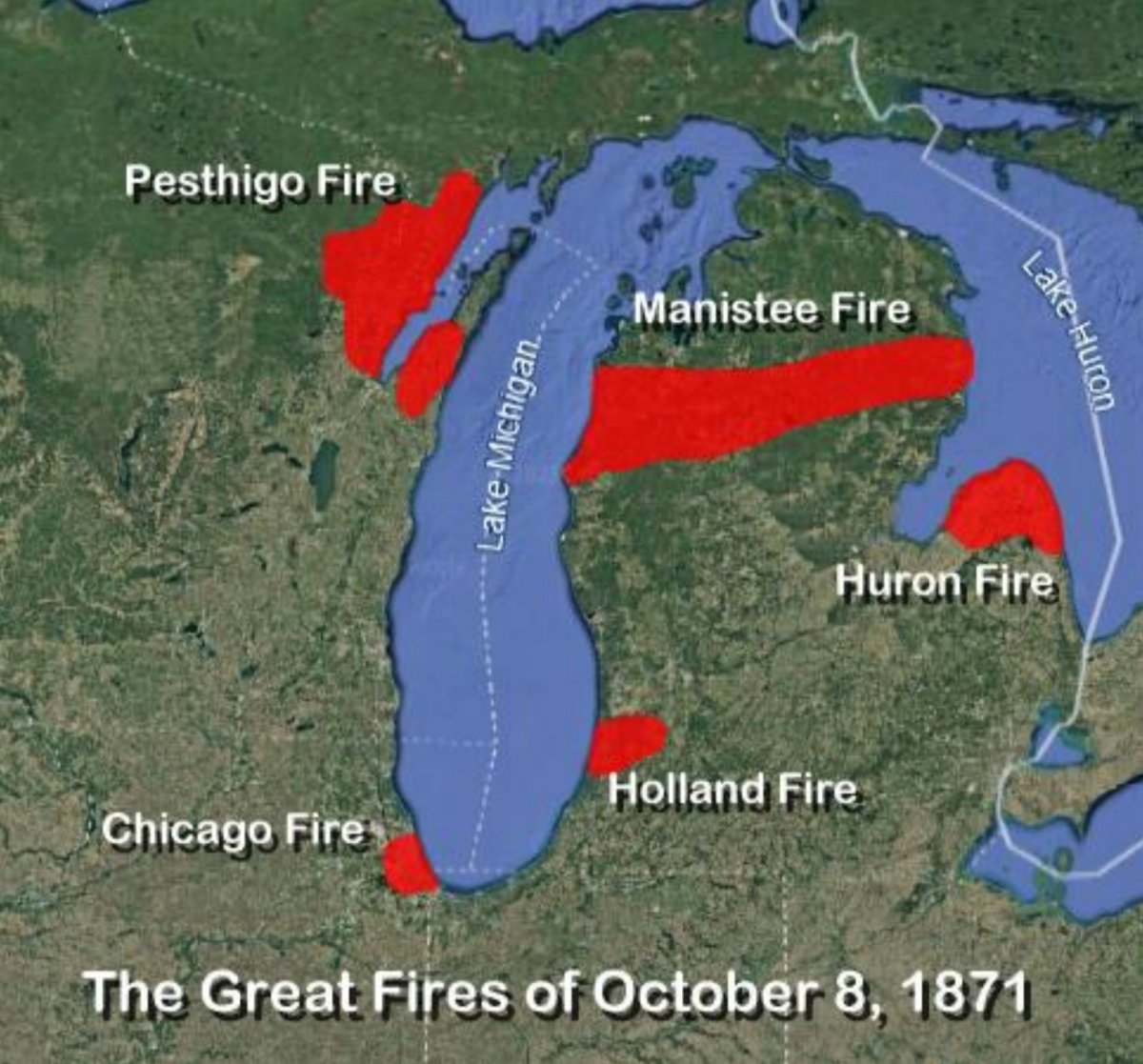
According to the Weather Almanac in Michigan there were an estimated 200 fatalities and 1.2 million acres were burned (compared with 250 fatalities in Chicago and a total of 1.25 million acres burned inclusive of the Chicago, Peshtigo and Michigan fires).
Naming of Gifford Lake
Allen F. Gifford (9/7/1839-6/21/1904) and Minnie A. Gifford (1845-1933) were pioneers who lived in Scottville, Mason County, Michigan for much of their lives. On Oct 1, 1880, Allen purchased 141.6 acres of what eventually became known as Gifford Lake and adjacent property from Rutherford B. Hayes, then president of the United States. Hayes signed the federal land patent (grant) pursuant to the Homestead Act of Congress.
Allen and Minnie are buried in Brookside Cemetery just west of downtown Scottville. Although it is assumed that Gifford Lake was named after Allen and Minnie, we're still searching for confirmation.
Early Property Development
Early Property Development
Gifford Lake remained undeveloped until the late 1930s when the first cottages began popping up around the shoreline.
One of the earliest photos of Gifford Lake was found at the Lake County Historical Museum. It pictures visitors to the Gwatkin cottage on the southeast corner of the lake in 1935. Unfortunately, the structure was destroyed by fire in later years.
Yet, one of the original cottages remains today. Paul and Barbara Veninger of Akron, Ohio built a small wood-framed cottage on the west side of the lake in 1938. The couple often invited close friends to the lake to share in the natural beauty. Their guests included Andrew and Catherine Marton of Akron and Emmett and Anne McMullin of Columbus, Ohio. The Martons purchased the property to the north of the Veningers for $150 in the 1940s while the McMullens purchased the property to the south. Both couples built cottages soon after the properties were purchased, bringing the total number of lakeside dwellings to four or five.
Later in the 40s, Oruloff Holden of Chicago broke ground for two cottages on the south side of the lake. Both places have been refurbished by recent occupants.
Irwin E. and Elsa L. Stegmier purchased property at the north end of Gifford Lake in 1947 and built their family cottage there in 1948. That cottage has remained in the Stegmier family, and is currently owned by Ann (Irwin and Elsa's granddaughter) and Mike Morin. This property abstract details the elaborate sales history of that property, beginning with its sale as a "homestead" by president Rutherford B. Hayes to Allen F. Gifford in 1880 and ending with its purchase by the Stegmiers in 1947.
Development of the southwestern and southern portion of the lake continued in 1948 through 1954. Elmer “Duff” Laubaugh, a conservation officer in Baldwin, purchased 79 acres there for a total of $26,000. He named the property Lynda Acres after his daughter, who maintained a residence on the lake for the rest of her life.
Later Property Development
The 1950s through 1970s saw a building boom on the lake. There are currently over 55 cottages and year round homes around the lake and a few parcels of vacant land remain. As the lake population grew, a small group of residents formed the Gifford Lake Association in the early 1970s to preserve the tranquility and natural beauty of the lake. The association remains active today.
Gifford Lake’s history continues as new families of those who originally came to lake in the 30s, 40s and 50s are making their own traditions today. Third and fourth generations of those first cottage owners now call Gifford Lake their own.
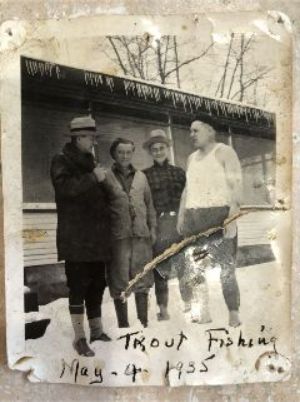
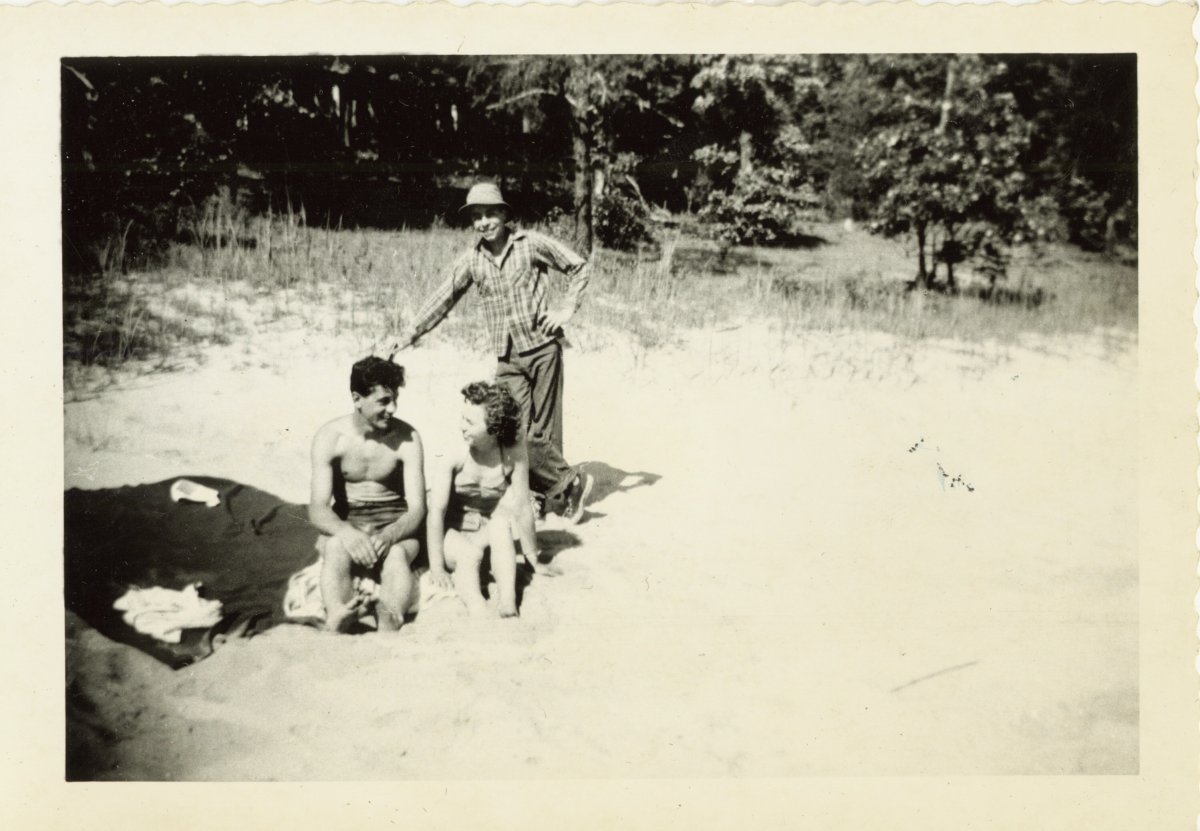

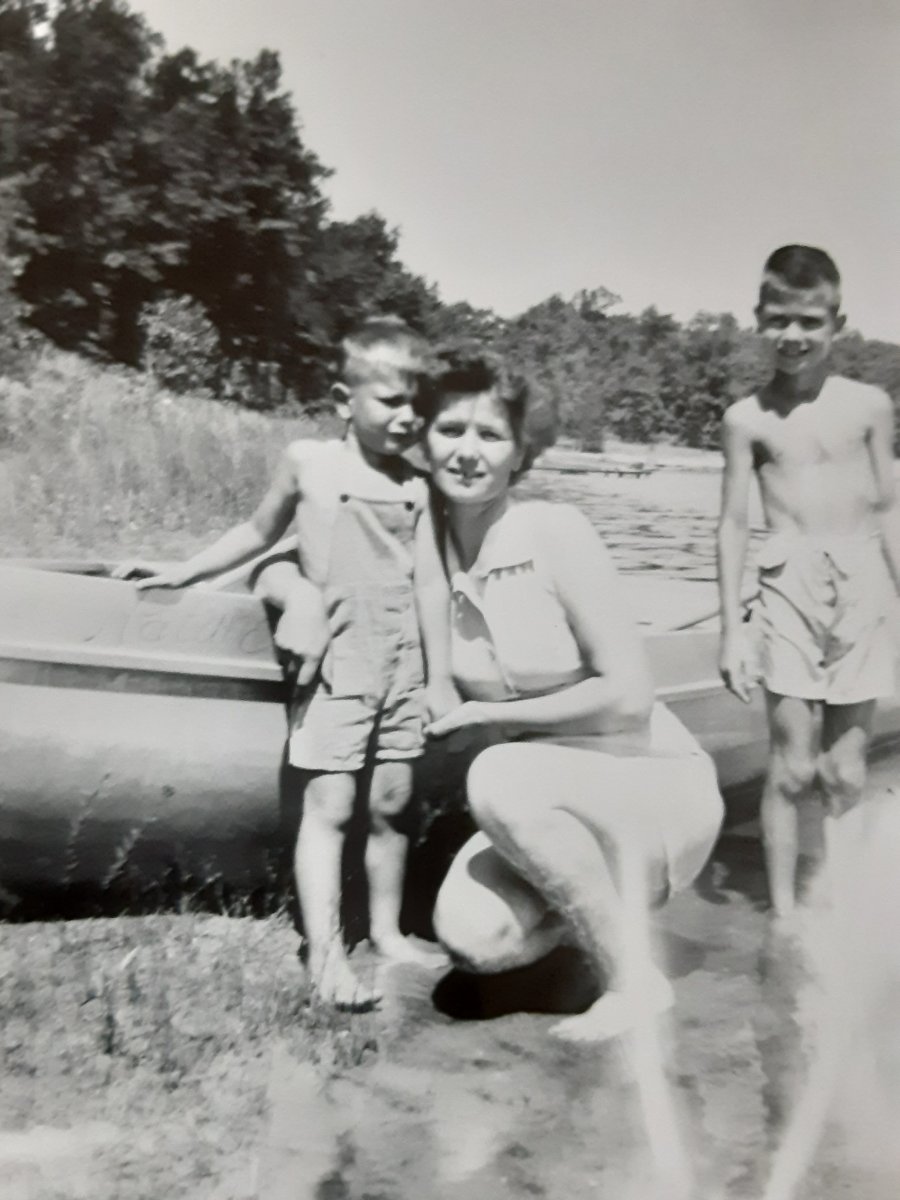

1st picture: Early photo of Jim Marton with his mother & brother.
2nd picture: Jim's parents with the Gustavels, the first owners of the oldest cabin on Gifford (now owned by the Geddes). The families were once called the "Ohio Colony".
Photos courtesy of Jim Marton